


Published: April 2026 · Written by Somineni Sharath Chandra
So your bank said no. Maybe your CIBIL score is low. Maybe you are new to credit and have no score at all. Or maybe you work for yourself and simply do not have a salary slip to show anyone.
Whatever the situation, you want to know if getting a personal loan without CIBIL or without a salary slip is actually possible. The short answer is yes. But there are things you need to understand before you apply anywhere, because some platforms are specifically designed to trap people who are already in a difficult spot.
This guide will tell you what actually works, what lenders really check, what to watch out for, and how to protect yourself.
What Is a CIBIL Score and Why Do Banks Care So Much
Your CIBIL score is a number between 300 and 900. Think of it as a report card that banks look at before deciding whether to give you money. It is based on whether you repaid past loans on time, how you use your credit card, and whether you have ever skipped a payment.
If your score is above 750, most banks will approve you without much trouble. If it is below 650, traditional banks will usually say no. And if you have never taken a loan or used a credit card, you have no score at all. Lenders call this being New to Credit, or NTC.
Being NTC is different from having a bad score. It just means the system has no data on you yet, not that you are a risky borrower. That is an important distinction and it changes which doors are actually open to you. If you want to understand exactly how your score is calculated and how to improve it, our Credit Score Guide walks through it step by step.
Can You Actually Get a Personal Loan Without a CIBIL Score
Yes, you can. But here is what most blogs do not tell you clearly.
Lenders who say they do not check CIBIL are not skipping the risk check entirely. They are just using different information to figure out if you can repay. Instead of your credit score, they look at your bank account activity, how regularly money comes in and goes out, your UPI transaction history, and sometimes even your utility bill payment patterns.
So the real question is not whether you can get a loan without CIBIL. It is whether you can show a lender some other proof that you are reliable. If you can, you have options.
Loan Without Salary Slip: Who Can Apply
A lot of people searching for loans without salary slips are self-employed, work in the informal sector, or get paid in cash. This is a very large part of India’s working population and banks have traditionally ignored them.
If you do not have a salary slip, lenders will typically accept bank statements showing regular credits over the last 3 to 6 months, GST returns if you run a small business, ITR filings for self-employed individuals, and in some cases consistent UPI transaction history that shows income coming in.
If a platform promises you a loan with no CIBIL check, no salary slip, and no bank statement required, that is a serious red flag. Legitimate lenders always need some way to verify that you can repay. No verification at all usually means extremely high hidden charges, or worse, a predatory app that will misuse your contact list to harass you if you are even one day late.
Your Real Options at a Glance
| Option | Best For | Estimated Cost (APR) | How Fast |
| NBFC or fintech app | Salaried or self-employed with bank history | 18% to 36% per year | 24 to 48 hours |
| Gold loan | Anyone with gold jewellery at home | 10% to 18% per year | Same day |
| Loan against FD | Anyone with a fixed deposit | 1% to 2% above FD rate | Same day |
| Salary advance | Salaried employees needing small amounts | Very low or zero | Within hours |
| Microfinance institution | Low income, tier 2 and tier 3 areas, informal workers | 20% to 30% per year | 2 to 3 days |
If you have gold at home, that is your fastest route to same-day cash. But if you have an FD sitting somewhere, borrowing against it is mathematically your cheapest option since the FD keeps earning interest while you repay, and the rate is far lower than any gold loan or personal loan. If you are weighing whether to keep that FD or move it into something more flexible, read our breakdown of Chit Funds vs FD before you decide.
The APR Warning You Cannot Skip
Before signing anything, always ask for the APR which stands for Annual Percentage Rate. This is the full cost of your loan including interest plus every fee combined. Some lenders advertise a 14% interest rate but charge a 3% to 5% processing fee upfront, making the real cost significantly higher. For example, a loan of Rs. 50,000 at 36% APR over 12 months means you repay more than Rs. 60,000 in total, and that number climbs further once you add upfront processing fees and GST which can easily push the total cost past Rs. 62,000. Always calculate the full repayment amount before you agree to anything.
The Foreclosure Trap Nobody Warns You About
This is one of the most common ways NBFCs keep borrowers paying longer than necessary.
Imagine you take a loan at 30% interest. Two months later you get a bonus or your financial situation improves and you want to close the loan early to stop paying interest. Sounds smart, right?
The problem is that many NBFCs charge a foreclosure or prepayment penalty of 4% to 5% on the remaining principal if you try to pay it off before the full tenure ends. This is their way of recovering the interest income they expected from you. So if you still owe Rs. 40,000 and try to close early, you might be charged an extra Rs. 1,600 to Rs. 2,000 just for paying the money back sooner.
Before you sign any loan agreement, ask the lender directly whether they charge a prepayment or foreclosure penalty and what the exact percentage is. If they say yes, factor that into your decision. A loan with a slightly higher interest rate but no foreclosure charge can actually be cheaper overall if there is any chance you will repay early.
What Documents You Will Need
Even without a salary slip, most lenders will ask for a few basic things.
The entire process on most fintech apps happens online. You upload photos, verify via OTP, and get a decision within hours.
Soft Pull vs Hard Inquiry: Know the Difference Before You Apply
Many people avoid checking their loan eligibility because they have heard that credit checks hurt your score. This is only partially true and you need to know the difference.
A soft pull happens when a lender checks your profile to show you pre-approved offers or rough eligibility. This does not affect your CIBIL score at all. Most loan apps do this before you formally apply so you can compare offers without any risk.
A hard inquiry happens when you officially submit a loan application and the lender formally requests your full credit report. This does reduce your score slightly, usually by 5 to 10 points, and stays on your record for 2 years.
The practical advice is this. Use soft pull eligibility checkers freely to compare rates across lenders. Once you find the right option, submit your formal application to only one lender at a time. Submitting to five lenders simultaneously means five hard inquiries hitting your report at once, which looks like financial desperation to any lender who checks your profile later.
How to Check If a Lender Is Genuine
Before you share any personal information, run through this checklist.
What Happens to Your Credit Score After You Take the Loan
Once you take a loan from a registered lender, they report your repayment behaviour to credit bureaus every month. If you pay on time, your CIBIL score starts building. After 6 to 12 months of clean repayment history, you will have a real credit profile and future borrowing will become easier and cheaper.
This is one of the most practical ways to build a CIBIL score from zero. Take a small loan, repay it perfectly, and let the system recognise you as a reliable borrower.
One Thing Worth Thinking About for the Future
Most people searching for an urgent loan without a salary slip are in that situation because savings were not available when the need came up. That is completely understandable.
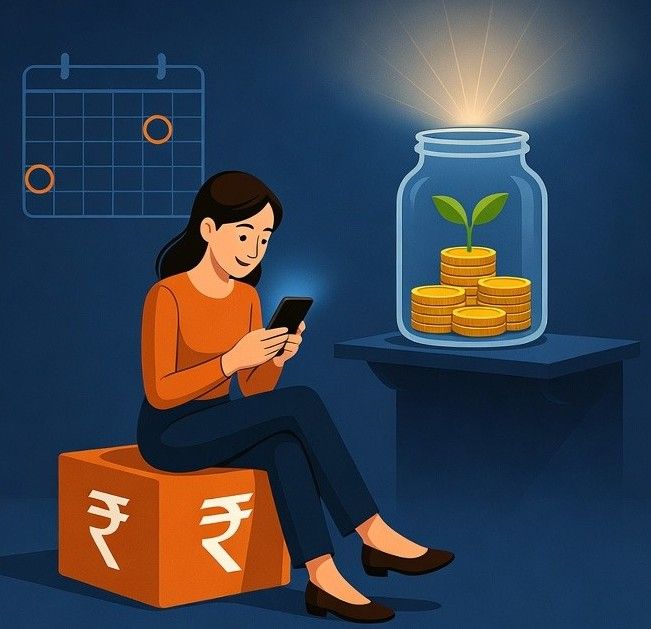
But once this situation is handled, the smartest next step is building a savings habit that puts money within reach the next time something unexpected happens. A chit fund works well for this because you commit a fixed amount every month and can access a lump sum through an auction when you genuinely need it, without going through a loan application or paying any interest. It is also one of the few savings tools specifically designed for emergencies, which you can read about in our blog on Role of Chit Funds in Emergencies.
If you are new to the concept entirely, start with How Chit Funds Work before exploring plans.
Ready to start building your own safety net? Explore myPaisaa chit plans and find one that fits your monthly budget.
Can I get an instant personal loan without a CIBIL score?
Yes, through fintech apps and NBFCs. But the interest rates are much higher than banks. Most charge between 24% and 42% per year. Make sure you calculate the full cost before applying.
Can I get an instant personal loan without a CIBIL score check online?
Yes. Many apps process applications fully online and disburse within 24 hours. But always verify if the app is RBI registered before sharing personal details.
How much income do I need?
Most lenders want at least Rs. 15,000 to Rs. 25,000 per month. If you are self-employed, regular bank credits for the last 3 to 6 months usually work.
Will this loan affect my CIBIL score?
Yes. The lender will report your repayments every month. Pay on time and your score improves. Miss a payment and it drops. Credit Score Guide
What if I miss an EMI?
Late fees can be very high. Some apps charge Rs. 500 to Rs. 2,000 per day. Your CIBIL score will also take a hit which affects future loans.
Is a chit fund the same as a loan?
No. In a chit fund you are accessing money from a pool that includes your own savings. You are not borrowing from anyone. There is no interest and no debt. How Chit Funds Work
Can I get a loan without income proof?
Legitimate lenders will always need some form of income proof even if it is just bank statements. Any app that promises loans with zero documentation is likely predatory.
What is the maximum I can borrow without CIBIL?
Through fintech apps, the typical range is Rs. 10,000 to Rs. 5,00,000 depending on your income. Higher amounts always need stronger documentation.
You might also like:
Join 10,000+ Subscribers
Be a part of our growing community


Comments (No Responses )
No comments yet.